"The fantasy never got beyond that- I didn't let it- and though the tears rolled down my facem I wasn't sobbing or out of control. I just waited a bit, then turned back to the car, to drive off to wherever I was supposed to be." (pg 288)
And so another AP Lit summer reading book ends in death and hopelessness. This better not be the theme for the year, Mr. Costello. I'm a happy person, alright? Stop bringing me down.
Anyways, I was also again dissapointed by the fact that nothing in the world the characters lived in changed. In both Never Let Me Go and Brave New World, there was no rebellion, no exciting climax, no change to society. Both stories ended with an outpouring of information about the way things are, but no end to those ways in sight. Maybe I'm too used to Children's and Young Adult novels in which happy endings are a staple, but I'm happy that way. Both books were engrossing the entire way through, and both had lessons. I've already discussed Brave New World's, but not yet Never Let Me Go's. I think the moral of this second book is that mankind is often selfish, and wishes to ignore the problems and injustices in the world so long as they benefit from it. Both books heed warnings to society, but leave me with a feeling of hopelessness.
Friday, August 12, 2011

do SOMETHING!
"Why should they be grateful? They came here looking for something much more. What we gave them, all the years, all the fighting we did on their behalf, what do they know of that?" (pg. 265)
At this point, if I were Kathy or Tommy, I would be angry. They have just discovered what the world thinks of them, and their one hope of living longer and happier has been bursted. They were created for one thing, and only one thing; to die for other people who don't care about them. So why are they taking it sitting down? Why don't they try to make a change? I'm not even asking for some big rebellion led by the clones of the world. But how about the two of them try to make an escape, run off to a remote island somewhere? I'm not sure if they haven't mentioned that option because the thought hasn't crossed their minds, or because there's something keeping them there, such as a tracker. Either way, I don't see a happy ending to this book, and it's starting to make me quite upset.
At this point, if I were Kathy or Tommy, I would be angry. They have just discovered what the world thinks of them, and their one hope of living longer and happier has been bursted. They were created for one thing, and only one thing; to die for other people who don't care about them. So why are they taking it sitting down? Why don't they try to make a change? I'm not even asking for some big rebellion led by the clones of the world. But how about the two of them try to make an escape, run off to a remote island somewhere? I'm not sure if they haven't mentioned that option because the thought hasn't crossed their minds, or because there's something keeping them there, such as a tracker. Either way, I don't see a happy ending to this book, and it's starting to make me quite upset.
Artist=Soulful?
"Or to put it more finely, we did it to prove you had souls at all." (pg. 260)
Interesting. Even though previously, I questioned whether or not clones could be loved in the same way as everyone else, I never questioned whether or not they had souls. I suppose this gets into the religious aspect of things, because a clone is no longer a different, individual being thatn everyone else, as God intended. However, I think they still have a different mind that is affected by how they are brought up, and that they very much have souls. The idea of clones may make your skin crawl, but the students themselves seem normal and should be treated as every other human is.
On another topic, may I just point out how I am a little miffed that people are putting such an importance in art as a gateway to the soul? Yes, I think that art can oftentimes reveal deep and emotional things about people. But just because someone isn't very creative or artistic doesn't mean they don't have a soul. I, someone without a creative bone in my body, am offended. I would be similiar to Tommy at the beginning at the book, but I stand by the idea that we both have very nice souls!
Interesting. Even though previously, I questioned whether or not clones could be loved in the same way as everyone else, I never questioned whether or not they had souls. I suppose this gets into the religious aspect of things, because a clone is no longer a different, individual being thatn everyone else, as God intended. However, I think they still have a different mind that is affected by how they are brought up, and that they very much have souls. The idea of clones may make your skin crawl, but the students themselves seem normal and should be treated as every other human is.
On another topic, may I just point out how I am a little miffed that people are putting such an importance in art as a gateway to the soul? Yes, I think that art can oftentimes reveal deep and emotional things about people. But just because someone isn't very creative or artistic doesn't mean they don't have a soul. I, someone without a creative bone in my body, am offended. I would be similiar to Tommy at the beginning at the book, but I stand by the idea that we both have very nice souls!
Forgiveness Will Renew You
"I can't remember what I answered. What I do remember is the strong mix of emotions that engulfed me at that moment. I realized immediately this was Tommy's way of putting behind us everything that had happened around his drawings back at the cottages, and I felt relief, gratitude, sheer delight." (pg. 241)
After all those years of dwelling on what happened the day in the cemetary, this moment must have felt good for Kathy. In the cemetary, Kathy never really got to speak her mind. Her words had been twisted, and because of that, Tommy was hurt. Sharing his drawings with Kathy again was his was of telling her that everything was okay. If I was Kathy, I would be very thankful. By sharing these drawings, Tommy was also able to bring up another subject: defering the donations. Although Ruth wanted Tommy and Kathy to give it a try, I think that it is only a way to get their hopes up, just to have them crashing down. True, it can't hurt anything, and can really only potentially help them live longer. But as I said before, I think the idea of defering donations is a dying man's last hope, something that has no evidence.
After all those years of dwelling on what happened the day in the cemetary, this moment must have felt good for Kathy. In the cemetary, Kathy never really got to speak her mind. Her words had been twisted, and because of that, Tommy was hurt. Sharing his drawings with Kathy again was his was of telling her that everything was okay. If I was Kathy, I would be very thankful. By sharing these drawings, Tommy was also able to bring up another subject: defering the donations. Although Ruth wanted Tommy and Kathy to give it a try, I think that it is only a way to get their hopes up, just to have them crashing down. True, it can't hurt anything, and can really only potentially help them live longer. But as I said before, I think the idea of defering donations is a dying man's last hope, something that has no evidence.
RUTH, RUth, ruth.
"And it was then, as she stood there, her shoulders rising and faling with her breathing, that Tommy seemed to become aware for the first time just how frail she was." (pg. 222)
At this point in the story, I have come to realize that Ruth is a dynamic character. Back at Hailsham, Ruth was a leader of the pack. She was fearless and dominating, a trendsetter. When she arrived at the Cottages, Ruth changed, but not entirely. She was in new waters, and therefore desperate to fit in. She was more apprehensive, but still generally confident in herself and not afraid to bring others down to bring herself up. When Ruth became a donor, though, she changed into a much less domineering person. She is suddenly unsure of her actions, even in her ideas. She doesn't have the same fight; it is like she has given up. It is saddening to realize that the donations can even break a seemingly untouchable person like Ruth.
At this point in the story, I have come to realize that Ruth is a dynamic character. Back at Hailsham, Ruth was a leader of the pack. She was fearless and dominating, a trendsetter. When she arrived at the Cottages, Ruth changed, but not entirely. She was in new waters, and therefore desperate to fit in. She was more apprehensive, but still generally confident in herself and not afraid to bring others down to bring herself up. When Ruth became a donor, though, she changed into a much less domineering person. She is suddenly unsure of her actions, even in her ideas. She doesn't have the same fight; it is like she has given up. It is saddening to realize that the donations can even break a seemingly untouchable person like Ruth.
Carer- a Pointless Occupation
"You spend hour after hour, on your own, driving across the country, centre to centre, hospital to hospital, sleeping in overnights, no one to talk to about your worries, no one to have a laugh with." (pg. 207)
The above passage employs parallelism by repeating different words again and again while describing the life of a carer. In this passage, parallelism is important because it shows how repetitive and boring a carer's life is. At this point, I'm becoming mystified as to EXACTLY what a carer does; they seem to me to be a bit like a hospice worker. They help provide comforts and company to the dying. Couldn't that sentence be an accurate job description for a hospice worker OR a carer? Kathy seems to appreciate her job more than I would expect; it seems depressing to do nothing but comfort the dying and wait for your own moment. It also has me wondering, do carers really have any affect at all on whether a patient lives or dies? They don't seem to be doctors or have any medical training at all, for that matter. Yes, companionship can keep the dying going. But carers don't have any decisions on medical matters, so how important are they, really? I suppose we'll have to find out!
The above passage employs parallelism by repeating different words again and again while describing the life of a carer. In this passage, parallelism is important because it shows how repetitive and boring a carer's life is. At this point, I'm becoming mystified as to EXACTLY what a carer does; they seem to me to be a bit like a hospice worker. They help provide comforts and company to the dying. Couldn't that sentence be an accurate job description for a hospice worker OR a carer? Kathy seems to appreciate her job more than I would expect; it seems depressing to do nothing but comfort the dying and wait for your own moment. It also has me wondering, do carers really have any affect at all on whether a patient lives or dies? They don't seem to be doctors or have any medical training at all, for that matter. Yes, companionship can keep the dying going. But carers don't have any decisions on medical matters, so how important are they, really? I suppose we'll have to find out!
Everything Changes
"It wasn't that I thought I'd burst into tears or lose my temper or anything like that. But I decided just to turn and go. Even later that day, I realized this was a bad mistake." (pg. 195)
This scene of the book serves as the turning point. When Kathy, Ruth, and Tommy are talking in the court yard, it is the moment when Ruth pushes everyone too far for things to be fixed. Kathy is nearing the age of becoming a carer already, and this conversation pushes her towards becoming one right away. I think that it is a true representation of the way their friendship has always been. Ruth is making Kathy sound bad, and making Tommy feel bad about himself. Kathy and Tommy are taking it quietly, like it always seems that they have. Now, everything will change with Kathy becoming a carer. Ruth, Tommy, and Kathy will not see each other every day, will no longer hold onto one another's friendship. I am sad that they have left one another like they did, but from Kathy's narration I know that they will come together again.
This scene of the book serves as the turning point. When Kathy, Ruth, and Tommy are talking in the court yard, it is the moment when Ruth pushes everyone too far for things to be fixed. Kathy is nearing the age of becoming a carer already, and this conversation pushes her towards becoming one right away. I think that it is a true representation of the way their friendship has always been. Ruth is making Kathy sound bad, and making Tommy feel bad about himself. Kathy and Tommy are taking it quietly, like it always seems that they have. Now, everything will change with Kathy becoming a carer. Ruth, Tommy, and Kathy will not see each other every day, will no longer hold onto one another's friendship. I am sad that they have left one another like they did, but from Kathy's narration I know that they will come together again.
Shhh... Ruth Will Find Out!
"This air of secrecy made it easier for me to keep from telling Ruth about Tommy buying me the Judy Bridgewater tape. I didn't go as far as actually hiding the thing... but I always made sure not to leave it out or on top of a pile." (pg. 184)
All Tommy did was buy Kathy a tape that she particularly wanted. In most relationships, this would never cause jealously. I think that the reason Kathy doesn't want Ruth to see the tape is because she knows that Ruth realizes that Kathy and Tommy should be together. Ruth is playing against the universe, because Kathy and Tommy are the dream pair. Inside, I think Ruth knows this, but won't admit it to herself.
Kathy finally finding the Judy Bridgewater tape is important after all of these years because it helps remind her of the song which kept her dreaming. The song not only is significant because it relates to not being able to have children or because Madame saw her dancing to it, but because it connects Kathy to Hailsham. If she had found it any other way, it would have brought Kathy and Ruth closer, instead of creating a secret between them. It is a shame that something that should have made Kathy so joyful brought such guilt and worry.
All Tommy did was buy Kathy a tape that she particularly wanted. In most relationships, this would never cause jealously. I think that the reason Kathy doesn't want Ruth to see the tape is because she knows that Ruth realizes that Kathy and Tommy should be together. Ruth is playing against the universe, because Kathy and Tommy are the dream pair. Inside, I think Ruth knows this, but won't admit it to herself.
Kathy finally finding the Judy Bridgewater tape is important after all of these years because it helps remind her of the song which kept her dreaming. The song not only is significant because it relates to not being able to have children or because Madame saw her dancing to it, but because it connects Kathy to Hailsham. If she had found it any other way, it would have brought Kathy and Ruth closer, instead of creating a secret between them. It is a shame that something that should have made Kathy so joyful brought such guilt and worry.
Wednesday, August 10, 2011
A Crazy Hope
"The thing about being from Hailsham was that you had this special chance. And if you didn't get stuff into Madame's gallery, then you were as good as throwing that chance away." (pg. 176)
Tommy's theories about creativity and the gallery seem to make some sense, but I find them hard to believe because of what they are based on. They seem to all go back to the idea that people can defer their donations if they are truly in love. I, for one, believe this is simply a desperate wish of people who have nothing to put their hope in. Tommy's theories do, however, have me questioning some things. Do the other schools emphasize art and creativity as much as Hailsham? Where they visited by Madame as well? If the answer to these questions is no, it would really clear up why the veterans treat people from Hailsham so differently.
As a side note, I can't help but point out how much Tommy seems to trust Kathy and care for her. I'm definately on team Kammy, not team Tuth!
Tommy's theories about creativity and the gallery seem to make some sense, but I find them hard to believe because of what they are based on. They seem to all go back to the idea that people can defer their donations if they are truly in love. I, for one, believe this is simply a desperate wish of people who have nothing to put their hope in. Tommy's theories do, however, have me questioning some things. Do the other schools emphasize art and creativity as much as Hailsham? Where they visited by Madame as well? If the answer to these questions is no, it would really clear up why the veterans treat people from Hailsham so differently.
As a side note, I can't help but point out how much Tommy seems to trust Kathy and care for her. I'm definately on team Kammy, not team Tuth!
Ruth Knows Best
"We all know it. We're modeled from trash. Junkies, prostitutes, winos, tramps. Convicts, maybe, just so long as they aren't psychos. That's what we come from. We all know it, so why don't we say it? A woman like that? Come on." (pg. 166)
In this particular passage, Ishiguro uses rhetorical questions in order to make Ruth's argument stronger. She speaks them to show how completely ridiculous her friends' ideas are. It completely plays into the thought that "Ruth knows best, all the time". Her words brought ideas that I hadn't even considered before to mind. Why can't the people they are cloned from be high-class people? Why must they be prostitutes, or junkies? It seems to me that those people would not only be unhealthy, but mentally unstable and not someone you would want to replicate. It may be that those types of people would be chosen because they wouldn't have enough power or loved ones to resist something that can be considered creepy and immoral. I wonder if there was an instance with a guardian that would cause Ruth to think this way, though. Hopefully it will be explained later. I think I'm saying that a lot during this book.
In this particular passage, Ishiguro uses rhetorical questions in order to make Ruth's argument stronger. She speaks them to show how completely ridiculous her friends' ideas are. It completely plays into the thought that "Ruth knows best, all the time". Her words brought ideas that I hadn't even considered before to mind. Why can't the people they are cloned from be high-class people? Why must they be prostitutes, or junkies? It seems to me that those people would not only be unhealthy, but mentally unstable and not someone you would want to replicate. It may be that those types of people would be chosen because they wouldn't have enough power or loved ones to resist something that can be considered creepy and immoral. I wonder if there was an instance with a guardian that would cause Ruth to think this way, though. Hopefully it will be explained later. I think I'm saying that a lot during this book.
Frienemies?
"Why do you have to be difficult? Now of all times! I don't get it. Why do you want to make trouble?" (pg. 148)
Although Ruth and Kathy are "apparently" the best of friends, I believe they are also the worst of enemies. In fact, I would name Ruth as the antagonist of this novel. Yes, sometimes Kathy can depend on her. But overall, she tends to put Kathy, Tommy, and Hailsham down. She is definitely doesn't have what I look for in my best friends, that I know. Overall, she also seems to block Kathy from what Kathy is destined to do, which is to be different and discover what others haven't been able to find out. Two-faced, obsessed with popularity, and disloyal are all words I would use to describe her. So why does Kathy stay all buddy-buddy with her? In some ways, I believe it is because she is too afraid to move on, too afraid of what her life will be like without Ruth. But my more reasonable, less angry side tells me that Kathy and Ruth really do care about each other like true friends do, and don't want to abandon one another in their trying times. Deep down though, I hope Kathy will toss Ruth to the side and move on to bigger and better things.
Although Ruth and Kathy are "apparently" the best of friends, I believe they are also the worst of enemies. In fact, I would name Ruth as the antagonist of this novel. Yes, sometimes Kathy can depend on her. But overall, she tends to put Kathy, Tommy, and Hailsham down. She is definitely doesn't have what I look for in my best friends, that I know. Overall, she also seems to block Kathy from what Kathy is destined to do, which is to be different and discover what others haven't been able to find out. Two-faced, obsessed with popularity, and disloyal are all words I would use to describe her. So why does Kathy stay all buddy-buddy with her? In some ways, I believe it is because she is too afraid to move on, too afraid of what her life will be like without Ruth. But my more reasonable, less angry side tells me that Kathy and Ruth really do care about each other like true friends do, and don't want to abandon one another in their trying times. Deep down though, I hope Kathy will toss Ruth to the side and move on to bigger and better things.
CLONES!!??
"Since each of use was copied at some point from a normal person, there must be, for each of us, somewhere out there, a model getting on with his or her life." (pg 139)
I must admit, I did not see this one coming. The students of Hailsham are clones?! No wonder they are separated from the rest of the world, to try to prevent them from stumbling upon their "possibles". I wonder, though, how they were born. Were they carried by humans, or, like in Brave New World, raised in a test tube? It also brings me back to the question I asked in my post about My Sister's Keeper- are they loved for who they are, as their own person? Are they even their own person, or really someone else? It reminds me of the book Double Identity by Margaret Peterson Haddix. In the book, Bethany slowly discovers that she is a clone of her sister Elizabeth who died at age 13. She has the same tendencies, like activities and favorite foods, that her sister did. Does being a clone give you your own mind and the ability to choose your destiny, or are you automatically destined to follow the life of the person you are modeled after? Because Ruth's "possible" works in an office, does that explain why Ruth wants to? This idea of the students being clones has my mind spinning.
I must admit, I did not see this one coming. The students of Hailsham are clones?! No wonder they are separated from the rest of the world, to try to prevent them from stumbling upon their "possibles". I wonder, though, how they were born. Were they carried by humans, or, like in Brave New World, raised in a test tube? It also brings me back to the question I asked in my post about My Sister's Keeper- are they loved for who they are, as their own person? Are they even their own person, or really someone else? It reminds me of the book Double Identity by Margaret Peterson Haddix. In the book, Bethany slowly discovers that she is a clone of her sister Elizabeth who died at age 13. She has the same tendencies, like activities and favorite foods, that her sister did. Does being a clone give you your own mind and the ability to choose your destiny, or are you automatically destined to follow the life of the person you are modeled after? Because Ruth's "possible" works in an office, does that explain why Ruth wants to? This idea of the students being clones has my mind spinning.
Never Let Me Go
"Because somewhere underneath, a part of us stayed like that: fearful of the world around us, and- no matter how much we despised ourselves for it- unable quite to let each other go." (pg. 120)
The above quote captures both the theme and title of Never Let Me Go. As Kathy and the students at Hailsham grow up, they must deal with separation and change. Throughout their early moments at the Cottages, they find a comfort in each other. Kathy, especially, feels an unwillingness to let go of her Hailsham memories and friends. Going to the Cottages is most likely similar to what going to college will soon be for the Class of 2012. The idea is terrifying, exhilarating, wonderful, and depressing all at the same time. As high schoolers, we are growing up, yet we are not yet on our own or truly seen as adults. College will provide that opportunity for us. The students at Hailsham are receiving even more of a shock by moving to the cottages, as they have never been outside of Hailsham. I can see how they would want to cling to one another's friendships and their memories like some college freshman will want to cling to photographs or Roncalli friends at their college.
The above quote captures both the theme and title of Never Let Me Go. As Kathy and the students at Hailsham grow up, they must deal with separation and change. Throughout their early moments at the Cottages, they find a comfort in each other. Kathy, especially, feels an unwillingness to let go of her Hailsham memories and friends. Going to the Cottages is most likely similar to what going to college will soon be for the Class of 2012. The idea is terrifying, exhilarating, wonderful, and depressing all at the same time. As high schoolers, we are growing up, yet we are not yet on our own or truly seen as adults. College will provide that opportunity for us. The students at Hailsham are receiving even more of a shock by moving to the cottages, as they have never been outside of Hailsham. I can see how they would want to cling to one another's friendships and their memories like some college freshman will want to cling to photographs or Roncalli friends at their college.
Tuesday, August 9, 2011
Let's Get to Know Each Other a Little
"Tommy's right. You're just the person to have when you're in the corner." (pg. 105)
Throughout Never Let Me Go, the author, Kazuo Ishiguro uses indirect characterization to reveal things about the characters. Never once does he simply say that Kathy is insightful, or that Ruth is popular and intimidating, or that Tommy is troubled. Instead, he uses the stories to explain these things. This form of characterization causes the reader to slowly form opinions about the characters. It also has allowed me to keep an open mind about all of them, instead of putting them in a box because of what is written in the first chapter. At this point, I'm not sure that I know enough about Kathy to predict how she is going to react to Ruth's talk. She seems like a good friend, but will her feelings for Tommy get in the way of helping Ruth out? I think Kathy will try to do what is right, but her hints about sex in the preceeding pages have me questioning.
Throughout Never Let Me Go, the author, Kazuo Ishiguro uses indirect characterization to reveal things about the characters. Never once does he simply say that Kathy is insightful, or that Ruth is popular and intimidating, or that Tommy is troubled. Instead, he uses the stories to explain these things. This form of characterization causes the reader to slowly form opinions about the characters. It also has allowed me to keep an open mind about all of them, instead of putting them in a box because of what is written in the first chapter. At this point, I'm not sure that I know enough about Kathy to predict how she is going to react to Ruth's talk. She seems like a good friend, but will her feelings for Tommy get in the way of helping Ruth out? I think Kathy will try to do what is right, but her hints about sex in the preceeding pages have me questioning.
Created for A Purpose
"Your lives are set out for you. You'll become adults, then before you're old, before you're even middle-aged, you'll start to donate your vital organs. That's what each of you was creted to do. You're not like the actors you watch on your videos, you're not even like me. You were brought into this world for a purpose, and your futures, all of them, have been decided." (pg. 81)
Wow. Tell it like it is, Miss Lucy. For the students at Hailstorm, I would imagine Miss Lucy's outburst was a slap in the face. Kathy does, in the following pages, talk about how she thinks the students already knew, but didn't want to truly face the facts. It must have been depressing knowing that dreams of future families and careers were useless. The whole idea of being made for the sole purpose of saving someone else reminds me of My Sister's Keeper by Jodi Picoult. In the book, Anna was born to her parents for the sole purpose of donating bone marrow to her sister with Leukemia, Kate. Was Anna truly loved for the person she was, or for what she could do for Kate? I think that despite the reason she was created for, she was loved greatly as her own person. I would imagine that each person at Hailsham would also have been loved for who they were, but I must wonder- who were their parents, and why aren't those parents present in the lives of the students? Miss Lucy's outburst confirmed some suspicions that were arising, but left me with more questions as well.
Wow. Tell it like it is, Miss Lucy. For the students at Hailstorm, I would imagine Miss Lucy's outburst was a slap in the face. Kathy does, in the following pages, talk about how she thinks the students already knew, but didn't want to truly face the facts. It must have been depressing knowing that dreams of future families and careers were useless. The whole idea of being made for the sole purpose of saving someone else reminds me of My Sister's Keeper by Jodi Picoult. In the book, Anna was born to her parents for the sole purpose of donating bone marrow to her sister with Leukemia, Kate. Was Anna truly loved for the person she was, or for what she could do for Kate? I think that despite the reason she was created for, she was loved greatly as her own person. I would imagine that each person at Hailsham would also have been loved for who they were, but I must wonder- who were their parents, and why aren't those parents present in the lives of the students? Miss Lucy's outburst confirmed some suspicions that were arising, but left me with more questions as well.
A Child Believes
"We both felt deep down some tug, some old wish to believe again in something that was once close to our hearts." (pg 67)
Norfolk, to me, seems to have the same concept as Santa Clause does to many children. Norfolk was a comfort, something that made the children happy and gave them something to believe in. There's no solid fact in it, but being able to believe is a good feeling. Especially once the students didn't believe in Norfolk anymore, they wanted to believe in it. I, personally, would give anything to believe in Santa once more. I find it highly ironic that when Kathy did find a copy of the tape, it was in Norfolk. It's almost like a movie, when adults don't believe in Santa Clause anymore, yet there's an unexplained gift under the tree with EXACTLY what they want. Yes, this is a fictional book like those are fictional movies. I think, however, that Kathy finding the tape in Norfolk is the author's special tribute to the imagination of every child.
"Your Honor, a lot of people believe in Mr. Kringle. Including millions of children. If you rule against him, you won't destroy anyone's belief but you will destroy the man they believe in. Mr. Kringle is not concerned for himself, if he was he wouldn't be here. He is in this regrettable positon because he is willing to sacrifice himself for children. To create in their minds a world far better than the one we've made for them. If this is, as Mr. Collins suggests, a masquerade then Mr. Kringle is eager to forfeit his freedom to preserve that masquerade. To subject himself to prosecution to protect the children's right to believe. If this court finds that Mr. Kringle is not who he says he is, that there is no Santa, I ask the court to judge which is worse: A lie that draws a smile or a truth that draws a tear." (Miracle of 34th Street)
Norfolk, to me, seems to have the same concept as Santa Clause does to many children. Norfolk was a comfort, something that made the children happy and gave them something to believe in. There's no solid fact in it, but being able to believe is a good feeling. Especially once the students didn't believe in Norfolk anymore, they wanted to believe in it. I, personally, would give anything to believe in Santa once more. I find it highly ironic that when Kathy did find a copy of the tape, it was in Norfolk. It's almost like a movie, when adults don't believe in Santa Clause anymore, yet there's an unexplained gift under the tree with EXACTLY what they want. Yes, this is a fictional book like those are fictional movies. I think, however, that Kathy finding the tape in Norfolk is the author's special tribute to the imagination of every child.
"Your Honor, a lot of people believe in Mr. Kringle. Including millions of children. If you rule against him, you won't destroy anyone's belief but you will destroy the man they believe in. Mr. Kringle is not concerned for himself, if he was he wouldn't be here. He is in this regrettable positon because he is willing to sacrifice himself for children. To create in their minds a world far better than the one we've made for them. If this is, as Mr. Collins suggests, a masquerade then Mr. Kringle is eager to forfeit his freedom to preserve that masquerade. To subject himself to prosecution to protect the children's right to believe. If this court finds that Mr. Kringle is not who he says he is, that there is no Santa, I ask the court to judge which is worse: A lie that draws a smile or a truth that draws a tear." (Miracle of 34th Street)
Flash... Flash... Flash!
"I think I sensed how beyond that line, there was something harder and darker and I didn't want that. Not for me, not for any of us." (pg 55)
Never Let Me Go is a novel chock full of flashbacks. In fact, because so much of the story has taken place in the past, I almost like to think of Kathy's moments taking about the present as flash-forwards. In this format, Kathy is able to tell about her memories from a different perspective than if we were hearing about them as they happened. Some may not have seemed important at the time, like when Miss Emily caught Kathy in a place she wasn't supposed to be, but didn't punish her in the slightest. However, because Kathy has knowledge now that she didn't have as a child, she is able to realize that they are important. Therefore, the reader gets to hear about them. She is also more honest, like how she admits that the "secret gaurd" never had any true evidence, but was a fantasy game that she loved to play as a child. Hearing children's memories told from an adult has its advantages.
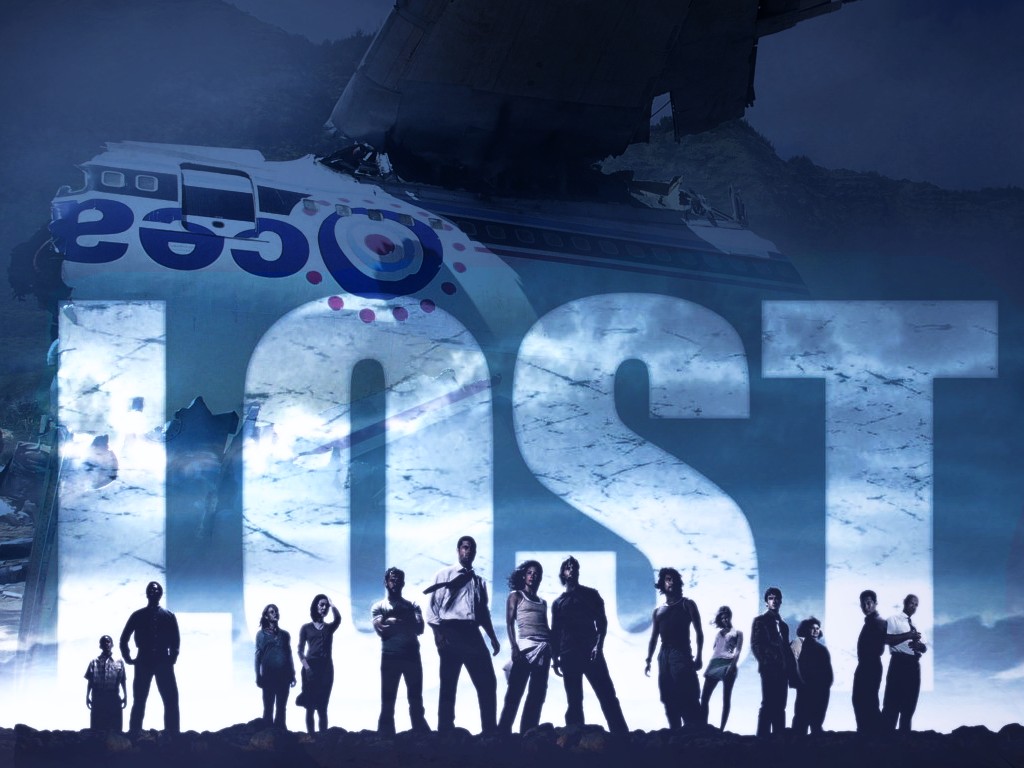
All of these flashbacks remind me of LOST, which as we all know, focuses on a new character with the flashbacks every episode. They mainly explained things about the characters little by little, until the flash-forwards came in, along with the side-ways flashes. Those complicated things a bit, but Never Let Me Go will hopefully keep it simple!
Never Let Me Go is a novel chock full of flashbacks. In fact, because so much of the story has taken place in the past, I almost like to think of Kathy's moments taking about the present as flash-forwards. In this format, Kathy is able to tell about her memories from a different perspective than if we were hearing about them as they happened. Some may not have seemed important at the time, like when Miss Emily caught Kathy in a place she wasn't supposed to be, but didn't punish her in the slightest. However, because Kathy has knowledge now that she didn't have as a child, she is able to realize that they are important. Therefore, the reader gets to hear about them. She is also more honest, like how she admits that the "secret gaurd" never had any true evidence, but was a fantasy game that she loved to play as a child. Hearing children's memories told from an adult has its advantages.
All of these flashbacks remind me of LOST, which as we all know, focuses on a new character with the flashbacks every episode. They mainly explained things about the characters little by little, until the flash-forwards came in, along with the side-ways flashes. Those complicated things a bit, but Never Let Me Go will hopefully keep it simple!
Monday, August 8, 2011
Enough with the Secrets, Already!
"All I can tell you today is that it's for a good reason. A very important reason. But if I tried to explain it o you now, I don't think you'd understand. One day, I hope, it'll be explained to you." (pg. 40)
I can't decide whether or not I like Miss Lucy- she seems to want to tell me (and the students) what's going on, but may just be driving me more mad. As it is, the "gallery" is a giant mystery to both of us. When Polly asked the question, I thought I was going to get an answer, but was dissapointed by both Miss Lucy's reaction and the other students' reaction. I keep noticing that the students not only seem afraid to defy any social norms, but appear very united in their opinions. And besides the occasions of teasing Tommy at ridiculous levels, it appears the students get along quite well. As weird as this sounds, I wish my class in gradeschool had had the same chemistry.
Although the subject matter is quite different, this book reminds me greatly of the book we read last summer for AP Lang, A Seperate Piece. Both books are first person, told by an adult who is looking back at their time at a boarding school with newfound knowledge. I think I like this book significantly more, though. Maybe because it's told from the point of view of a girl, or maybe because I've heard the last few chapters are mind-blowing and I'm looking forward to it. Hopefully I won't be let down!
I can't decide whether or not I like Miss Lucy- she seems to want to tell me (and the students) what's going on, but may just be driving me more mad. As it is, the "gallery" is a giant mystery to both of us. When Polly asked the question, I thought I was going to get an answer, but was dissapointed by both Miss Lucy's reaction and the other students' reaction. I keep noticing that the students not only seem afraid to defy any social norms, but appear very united in their opinions. And besides the occasions of teasing Tommy at ridiculous levels, it appears the students get along quite well. As weird as this sounds, I wish my class in gradeschool had had the same chemistry.
Although the subject matter is quite different, this book reminds me greatly of the book we read last summer for AP Lang, A Seperate Piece. Both books are first person, told by an adult who is looking back at their time at a boarding school with newfound knowledge. I think I like this book significantly more, though. Maybe because it's told from the point of view of a girl, or maybe because I've heard the last few chapters are mind-blowing and I'm looking forward to it. Hopefully I won't be let down!
How Far Can I Push it?
"I suspect the truth was that it was like a lot of things at that age; you don't have any clear reason, you just do it. You do it because you think it might get a laugh, or because you want to see if it'll cause a stir. And when you're asked to explain it afterwards, it doesn't seem to make any sense. We've all done things like that." (pg. 19)
Never Let Me Go is told from first person point of view. This style of writing allows the narrator, Kathy, to disclose all of her opinions to the reader. I think that it also makes the novel appear more personal. One disadvantage of first person piont of view is that we only see the story from the point of view of one character, and therefore we most likely miss many details.
The above quote (narrated by Kathy) really stuck out at me, because it sounded all too familiar. I believe that many teenagers can relate to it, because we often do things that don't make sense to anyone else, but seem like a fantastic idea at the time. I will admit, this thought process has gotten me in trouble a time or two (or ten or eighty...). As children and young adults, we often feel the need to push the limit, experiment with people's reactions. Sometimes, even though it doesn't make sense, it turns out okay. Other times, like with Tommy's elephant drawing, circumstances take a turn for the worse.
Never Let Me Go is told from first person point of view. This style of writing allows the narrator, Kathy, to disclose all of her opinions to the reader. I think that it also makes the novel appear more personal. One disadvantage of first person piont of view is that we only see the story from the point of view of one character, and therefore we most likely miss many details.
The above quote (narrated by Kathy) really stuck out at me, because it sounded all too familiar. I believe that many teenagers can relate to it, because we often do things that don't make sense to anyone else, but seem like a fantastic idea at the time. I will admit, this thought process has gotten me in trouble a time or two (or ten or eighty...). As children and young adults, we often feel the need to push the limit, experiment with people's reactions. Sometimes, even though it doesn't make sense, it turns out okay. Other times, like with Tommy's elephant drawing, circumstances take a turn for the worse.
I'm Puzzled already...
"Carers aren't machines. You try and do your best for every donor, but in the end, it wears you down. You don't have unlimited patience and energy. So when you get a change to choose, of course, you choose your own kind. That's natural." (pg. 4)
In the beginning of Never Let Me Go, something is immediately eminent- the reader isn't being told all the details at once, but instead will catch up little by little. One thing that made this stick out so much was that some of the dialect I didn't understand. Words such are carers and donations (it was clear that this use of the word had special meaning) have left me puzzled and dying to know more. Obviously, the narrator, Kathy H uses those words in her normal language. I think that a carer appears to be a sort of doctor, and the donations involve donating body parts. However, I'm puzzled as to why people are donating body parts, what happened in Kathy, Tommy, and Ruth's past, and what exactly Hailsham is. Is it a normal boarding school in England, or something more? I can't figure out whether is book is similiar to Brave New World in the way that it is a completely hypothetical, alternate universe, or whether it is meant to be "really able to happen". Hopefully I will understand the dialect of Kathy better as I read.
In the beginning of Never Let Me Go, something is immediately eminent- the reader isn't being told all the details at once, but instead will catch up little by little. One thing that made this stick out so much was that some of the dialect I didn't understand. Words such are carers and donations (it was clear that this use of the word had special meaning) have left me puzzled and dying to know more. Obviously, the narrator, Kathy H uses those words in her normal language. I think that a carer appears to be a sort of doctor, and the donations involve donating body parts. However, I'm puzzled as to why people are donating body parts, what happened in Kathy, Tommy, and Ruth's past, and what exactly Hailsham is. Is it a normal boarding school in England, or something more? I can't figure out whether is book is similiar to Brave New World in the way that it is a completely hypothetical, alternate universe, or whether it is meant to be "really able to happen". Hopefully I will understand the dialect of Kathy better as I read.
Subscribe to:
Posts (Atom)