"People are not so dreadful when ou know them. That's what you have to remember! And everybody has problems, not just you, but practivally everybody has got some problems. You think of yourself as havinghte only problems, as being the only one who is disappointed. But just look around you and you will see lots of people as disappointed as you are."
The Glass Menagerie, pg. 1277
"The different people are not like toher people, but being different is nothing to be ashamed of. Because other people are not such wonderfull people. They're one hundred times one thousand. You're one times one!"
pg. 1283
I could find two themes throughout this play- one was very positive, and the other mainly negative. The first, represented by the quote on top, is negative. It basically says that there are many unhappy people in this world- that it is inevitable, that being unhappy is not a unique quality. This is sometimes true, although I like to think that there are a lot of happy people in this world. It reminds me of the song "Just Wait" by Blues Traveler:
"If ever you are feeling like you're tired And all your uphill struggles leave you headed downhill If you realize your wildest dreams can hurt you And your appetite for pain has drinken it's fill
I ask of you a very simple question Did you think for one minute that you are alone? And is your suffering a privilege you share only? Or did you think that everybody else feels completely at home?"
The song goes on to explain that things will get better, and that sharing troubles with others can make it better. Jim lightly touches on this, how Laura is not alone, which is comforting.
The second theme is better- it says that originality is prized. Jim points out that Laura is different, in a good way. In life we often can tire of the same things over and over again. Therefore, things that are different are good. Being original, even if it is a little weird, is good. I love this quote, and the theme that it conveys, because I consider myself a little different. But, as Jim says, it's something to be proud of!
Monday, February 27, 2012

Lost to the Audience
"The coat is one of AMANDA'S, inaccurately madeover, the sleeves too short for LAURA."
The Glass Menagerie, pg. 1250
Obviously, stage directions in this play seem to be of great importance. Most of the explanations that Tennessee Williams provided seemed important to the reader. However, it seems that many of them, such as the one above, would be lost when the play was actually performed onstage. How in the world is the audience supposed to know that the coat was Amanda's? Or that Laura's new dress was designed by memory? I don't understand how those things would be conveyed, unless it was actually spoken aloud. It was refreshing, however, to finally read something in which the symbols were actually explained, instead of having to guess at them (although I have been getting better!). More importantly than the signals being lost, to me, is the question of the importance of many of the details that Williams provides. In some ways, I thought he was just being overbearing to the performers. Granted, the director of this play can make changes that fit his or her fancy. I simply found it annoying that Williams didn't leave a lot of room for creativity, when many of the things he demanded didn't seem overly important. Oh, well!
The Glass Menagerie, pg. 1250
Obviously, stage directions in this play seem to be of great importance. Most of the explanations that Tennessee Williams provided seemed important to the reader. However, it seems that many of them, such as the one above, would be lost when the play was actually performed onstage. How in the world is the audience supposed to know that the coat was Amanda's? Or that Laura's new dress was designed by memory? I don't understand how those things would be conveyed, unless it was actually spoken aloud. It was refreshing, however, to finally read something in which the symbols were actually explained, instead of having to guess at them (although I have been getting better!). More importantly than the signals being lost, to me, is the question of the importance of many of the details that Williams provides. In some ways, I thought he was just being overbearing to the performers. Granted, the director of this play can make changes that fit his or her fancy. I simply found it annoying that Williams didn't leave a lot of room for creativity, when many of the things he demanded didn't seem overly important. Oh, well!
A Selfish Mother
"This is the dress in which I led teh cotillion. Won the cakewalk twice at Sunset Hill. wore one spring to the Governor's ball in Jackson! See how I sashayed around the ballroom, Laura?"
The Glass Menagerie, pg. 1265
Despite all of her accusations that Tom is a selfish son, I think that Amanda is the most selfish character in this play. This is saying something, considering the size of Jim's ego, and Tom's actions at the end. However, Amanda wins out because even in the most dire circumstances, she has to put the attention on herself. Multiple times in this short play, she goes off, reminding her children how popular and sought-after she was when she was growing up. When Jim comes over, while she is supposed to be setting up Jim and Laura, Amanda dresses her best, flirting with her daughter's caller. Immediately, her style of talking changes, using a southern accent with phrases like " "It takes a while fo' us to adjust ou'selves". Her dress and style of talking both put the spotlight on herself, rather than her daughter. Even when she does put the spotlight on her daughter, it is indirectly to benefit herself, as a smart match for her daughter will help provide for Amanda. Selfish is the first word I would use to characterize Amanda.
The Glass Menagerie, pg. 1265
Despite all of her accusations that Tom is a selfish son, I think that Amanda is the most selfish character in this play. This is saying something, considering the size of Jim's ego, and Tom's actions at the end. However, Amanda wins out because even in the most dire circumstances, she has to put the attention on herself. Multiple times in this short play, she goes off, reminding her children how popular and sought-after she was when she was growing up. When Jim comes over, while she is supposed to be setting up Jim and Laura, Amanda dresses her best, flirting with her daughter's caller. Immediately, her style of talking changes, using a southern accent with phrases like " "It takes a while fo' us to adjust ou'selves". Her dress and style of talking both put the spotlight on herself, rather than her daughter. Even when she does put the spotlight on her daughter, it is indirectly to benefit herself, as a smart match for her daughter will help provide for Amanda. Selfish is the first word I would use to characterize Amanda.
Thursday, February 16, 2012
All the World's a Stage
"All the world's a stage,
And all the men and women merely players:
They have their exits and their entrances;
And one man in his time plays many parts"
As You Like It II.vii. pg 32
This metaphor compares life to a play, and humans to characters inthe play. it helps get Jaques' point across that the world is sometimes fake, or laid out for us with a specific pattern. I think this is one of the most timeless parts of Shakespeare's play. We can all relate to the feeling of playing a part sometimes. We go to school, or work, or say something just because it is what everyone expects us to say, or what we are expected to do. We sometimes switch it up, or "play many parts". However, the feeling that life is sometimes all planned out for us with certain costume changes or acts is very relateable. This especially connects to As You Like It because of the front that Rosalind puts on for Orlando; she is acting as someone who she isn't actually for a part of the play, just like we sometimes act as people who we aren't. I loved the topic of this speech.
And all the men and women merely players:
They have their exits and their entrances;
And one man in his time plays many parts"
As You Like It II.vii. pg 32
This metaphor compares life to a play, and humans to characters inthe play. it helps get Jaques' point across that the world is sometimes fake, or laid out for us with a specific pattern. I think this is one of the most timeless parts of Shakespeare's play. We can all relate to the feeling of playing a part sometimes. We go to school, or work, or say something just because it is what everyone expects us to say, or what we are expected to do. We sometimes switch it up, or "play many parts". However, the feeling that life is sometimes all planned out for us with certain costume changes or acts is very relateable. This especially connects to As You Like It because of the front that Rosalind puts on for Orlando; she is acting as someone who she isn't actually for a part of the play, just like we sometimes act as people who we aren't. I loved the topic of this speech.
Happy, happy, happy!
Oliver: "O that your Highness knew my heart in this!
I never loved my brother in my life."
Duke Frederick: "More villian though."
As You Like It III.i. pg 34
The difference between a tragedy and a comedy by Shakespeare? A ragedy leaves time for the characters to develop, so much so, that in Othello, I found myself cheering for the bad guy because I felt so close to him. In As You Like It, I could barely figure out who the antagonist was!! I felt like we were often thrown into the middle of the story, such as when, i the quote above, Duke Frederick and Oliver speak to one another as if they have known each other for a long time, but the audience has never seen their interactions or heard of their connection. The only clue i could find for their connections was that Oliver knows Charles, and Charles knows the Duke. Other than that, i had a hard time finding the connection.
Obviously, in a tragedy, the characters die, while in a comedy, they don't. It was refreshing for people to finally live happiy ever after, and the humor was nice. The ironic thing is, though, that I've been looking all year for a happy ending to an AP Lit work, but I think I enjoyed the tragedy more than the comedy in this case.
I never loved my brother in my life."
Duke Frederick: "More villian though."
As You Like It III.i. pg 34
The difference between a tragedy and a comedy by Shakespeare? A ragedy leaves time for the characters to develop, so much so, that in Othello, I found myself cheering for the bad guy because I felt so close to him. In As You Like It, I could barely figure out who the antagonist was!! I felt like we were often thrown into the middle of the story, such as when, i the quote above, Duke Frederick and Oliver speak to one another as if they have known each other for a long time, but the audience has never seen their interactions or heard of their connection. The only clue i could find for their connections was that Oliver knows Charles, and Charles knows the Duke. Other than that, i had a hard time finding the connection.
Obviously, in a tragedy, the characters die, while in a comedy, they don't. It was refreshing for people to finally live happiy ever after, and the humor was nice. The ironic thing is, though, that I've been looking all year for a happy ending to an AP Lit work, but I think I enjoyed the tragedy more than the comedy in this case.
Test Run
"Love is merely a madness; and, I tell you, deserves as well a dark house and a whip as madmen do."
As You Like It, III.ii.pg 45
What is Rosalind's motive when she poses as Ganymede? She doesn't trust him, and wants to find out if his love is sincere. From the above quote, we can infer that Rosalind has not had the best experiences with love. So, this is Rosalind's defense mechanism. It makes perfect sense, for she has just met Orlando. However, Orlando already says,
"fair youth, I would I could make thee believe I love"
III.ii.pg 45
he says he already loves her, but she wants him to prove it. This is completely understandable, as Rosalind doesn't want to be hurt by a boy's fickle mind. By posing as Ganymede, Rosalind is able to test Orlando, to see if he speaks as well of her when she is not around as when she is. She also seems to test his character and reliability during this time. In the end, it all appears to work out for her.
As You Like It, III.ii.pg 45
What is Rosalind's motive when she poses as Ganymede? She doesn't trust him, and wants to find out if his love is sincere. From the above quote, we can infer that Rosalind has not had the best experiences with love. So, this is Rosalind's defense mechanism. It makes perfect sense, for she has just met Orlando. However, Orlando already says,
"fair youth, I would I could make thee believe I love"
III.ii.pg 45
he says he already loves her, but she wants him to prove it. This is completely understandable, as Rosalind doesn't want to be hurt by a boy's fickle mind. By posing as Ganymede, Rosalind is able to test Orlando, to see if he speaks as well of her when she is not around as when she is. She also seems to test his character and reliability during this time. In the end, it all appears to work out for her.
Monday, February 13, 2012
Othello is Timeless
Amy Hemmelgarn, 8, February 13, 2012, Reflective Esssay
William Shakespeare’s Othello is a story of betrayal, love, and corruption. Although it is set in 13th century Cyprus and written in 16th century England
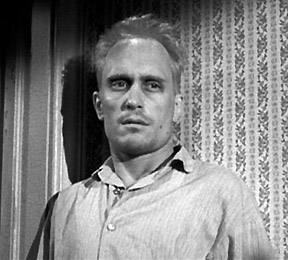
In To Kill A Mockingbird, Boo Radley is a character who originally keeps to himself. As Scout puts it, “what Mr. Radley did was his own business (Lee, Harper, 49). In the same way, Emilia of Othello tends to keep to herself unless she is directly confronted with questions. However, when young Scout and Jem are being attacked by Mr. Ewell, Boo is no longer shy or scared; he fearlessly protects the children.
For an analysis on how Boo shows courage, check out this link: the third box down has some insights. Boo Shows Courage
Later, after Scout realizes that Boo was the person who saved her, she reflects that Boo did it because “Boo was our neighbor (Lee, Harper, 278).” However, this can be interpreted as more; Boo did it because he loved the children and wanted to save them from injustice. In the same way, Emilia, because she loves Desdemona and wants to save her from injustice, stands up to her ruthless husband Iago with cries of “You told a lie, an odious, damned lie (V.ii.179)”. Both characters show drastic personality changes when their loved ones are on the line.
Shy, forgettable characters who alter themselves for their loved ones don’t always profess their love in the same way. Emilia and Boo stand up to injustice when protecting their loved ones; Mr. Clark in Grey’s Anatomy believes he is doing the same when going on a killing spree in a hospital after his wife’s death.
When speaking to Mr. Clark, Dr. Shepard expresses his condolences for Mr. Clark’s dead wife, acknowledging that he understands that Mr. Clark wants to take action about his wife’s death: “You want justice- you want somebody to pay (Rhimes, Shonda, Sanctuary).” Mr. Clark, who was formerly a controlled, loving man, becomes completely different in the wake of his wife’s death. When he tries to avenge his loved one, he loses control. Emilia also seems to lose control in her anger and grief over Desdemona’s wrongful death. Love can cause logical people to perform insane actions. In both Othello and Grey’s Anatomy, the love ends in death for the character; Emilia by Iago, and Mr. Clark by his own hand.
The character Emilia is the most dynamic in Othello, and ends up playing an important role in the story. Shakespeare shows the world that no person should be written off as insignificant when love present, because love can make people do things they otherwise would not. Whether it is the 13th, 16th, 20th, or 21st century, love is a catalyst unlike any other.
 |
| Emilia of Othello |
 |
| Boo Radley of To Kill a Mockingbird |
 |
| Mr. Clark of Grey's Anatomy |
Works Cited
Lee, Harper. To Kill A Mockingbird. Philadelphia
Rhimes, Shonda. "Sanctuary." Grey's Anatomy. Dir. Stephen Cragg. ABC. 20 May 2010. Television.
Monday, February 6, 2012
Taylor Swift- Better Than Revenge
Although jumping around and singing in a girly voice doesn't really seem to fit Iago's character, in a way this would be his perfect theme song. One of the main (supposed) motivations behind his actions is to get revenge on Othello for sleeping with his wife. Just like Taylor in this song, he is eager to prove that he is not someone to be messed with. If Othello did sleep with his wife, he obviously "underestimated just who he was stealing from." Iago also obviously had a way with manipulating words, to be convincing and to appear polite even when he may not be actually doing so. Taylor Swift exhibits this talent when she says "she's better known for the things that she does on the mattress". I have always thought this was, if possible, a very classy way to insult a girl for being easy. In the same way, Iago plays with words to make insults seem sweet and terrible ideas seem logical. So, since this is his new theme song, can't you see Iago strutting down the streets of Cyprus with it playing in the background?
Link to the lyrics:
http://www.metrolyrics.com/better-than-revenge-lyrics-taylor-swift.html
 Whoa, Taylor's looking edgy there. It's new for her, but much more in the style of Iago, I'd say.
Link to the lyrics:
http://www.metrolyrics.com/better-than-revenge-lyrics-taylor-swift.html

Thursday, February 2, 2012
What you know, you know.
"Killing myself, to die upon a kiss."
V. ii. 357.
Really? Reaaallyyy? Of course, suicide is "noble" in old times. I know this is another Shakespearean tragedy, so it can only be expected that the main character be killed or commit suicide, but really? It is like a gigantic nuclear bomb exploded on Shakespeare's play set. I did, however, find it interesting that Iago lived. I was slightly glad, despite my hatred of him. I've grown close to the character, and want him to understand that his actions are wrong and pay for them, rather than just dying in ignorance of how evil he is. The most frustrating part of this play, however, was not finding out Iago's motivation for his work. I think he was potentially just insane. Or, he wanted Desdemona for himself. However, he was pushing for her death, so that may not have been it either. Perhaps he actually wanted Bianca, and just wanted everyone else out of the way. Or, maybe everyone was wrong about him, and he had homosexual tendencies and actually was trying to clear out Desdemona so he could be with Othello. Maybe, he just wanted to be at the top of Cyprus' government himself, and it had nothing to do with love, just power. I guess we'll never know, for as Iago says:
"What you know, you know."
V. ii. 303.
Annoying. Although the play overall was fantastic, I was ecstatic to feel like I was finally understanding Shakespeare.
V. ii. 357.
Really? Reaaallyyy? Of course, suicide is "noble" in old times. I know this is another Shakespearean tragedy, so it can only be expected that the main character be killed or commit suicide, but really? It is like a gigantic nuclear bomb exploded on Shakespeare's play set. I did, however, find it interesting that Iago lived. I was slightly glad, despite my hatred of him. I've grown close to the character, and want him to understand that his actions are wrong and pay for them, rather than just dying in ignorance of how evil he is. The most frustrating part of this play, however, was not finding out Iago's motivation for his work. I think he was potentially just insane. Or, he wanted Desdemona for himself. However, he was pushing for her death, so that may not have been it either. Perhaps he actually wanted Bianca, and just wanted everyone else out of the way. Or, maybe everyone was wrong about him, and he had homosexual tendencies and actually was trying to clear out Desdemona so he could be with Othello. Maybe, he just wanted to be at the top of Cyprus' government himself, and it had nothing to do with love, just power. I guess we'll never know, for as Iago says:
"What you know, you know."
V. ii. 303.
Annoying. Although the play overall was fantastic, I was ecstatic to feel like I was finally understanding Shakespeare.
You go, girl!
How is Emilia a dynamic character?
At the beginning, Emilia is quiet, timid and passive. Her husband puts her down and controls her, and she seems eager to please him. She simply takes his criticism-
IAGO: "You rise to play, and go to bed to work."
EMILIA: " You shall not write my praise."
II.i. 115-116
I was frustrated with Emilia at the beginning. How could she let a man talk to her like that? However, we see her become a loyal friend to Desdemona, including when Othello questions her about an affair-
OTHELLO: "You have seen nothing, then?"
EMILIA: "Now ever heard, nor ever did suspect...
I durst, my lord, to wager she is honest,
lay down my soul at stake."
IV.ii.1-2, 11-12.
Eventually, we even see Emilia stand up to her treacherous husband, in front of many people. She acts out of loyalty and love, but it is also evident she has become confident. I was so proud! I couldn't believe that the woman who appeared so insignificant made such a huge difference in the story line.
EMILIA: "You told a lie, an odious, damned lie,
Upon my soul, a lie, a wicked lie!"
At the beginning, Emilia is quiet, timid and passive. Her husband puts her down and controls her, and she seems eager to please him. She simply takes his criticism-
IAGO: "You rise to play, and go to bed to work."
EMILIA: " You shall not write my praise."
II.i. 115-116
I was frustrated with Emilia at the beginning. How could she let a man talk to her like that? However, we see her become a loyal friend to Desdemona, including when Othello questions her about an affair-
OTHELLO: "You have seen nothing, then?"
EMILIA: "Now ever heard, nor ever did suspect...
I durst, my lord, to wager she is honest,
lay down my soul at stake."
IV.ii.1-2, 11-12.
Eventually, we even see Emilia stand up to her treacherous husband, in front of many people. She acts out of loyalty and love, but it is also evident she has become confident. I was so proud! I couldn't believe that the woman who appeared so insignificant made such a huge difference in the story line.
EMILIA: "You told a lie, an odious, damned lie,
Upon my soul, a lie, a wicked lie!"
Iago- A love-hate relationship?
"My medicine, work! Thus credulous fools are caught,
And many worthy and chaste dames even thus,
All guiltless, meet reproach. What ho! My lord!"
Othello IV. i. 43-45
#9 Though Othello is the protagonist, the majority of soliloquies and asides are given to Iago. Why?
This play gives a different perspective to the traditional story and stage setup. Partly, I believe that Shakespeare wrote it in this form just to mix things up for once. I also believe he did this to show why and how the characters are so easily tricked. Iago is cunning, and his plans well thought out. This not only explains how they characters were tricked, but causes the audience to almost root for the antagonist. As humans we automatically side with clever, logical people because it is the most sensical thing to do. It is also easy to cheer for Iago because you feel close to him, almost like you are his confidant. Either way, Shakespeare obviously was presenting his audience with a new way to view characters, which makes the story entertaining, mysterious, and with opposing viewpoints.
And many worthy and chaste dames even thus,
All guiltless, meet reproach. What ho! My lord!"
Othello IV. i. 43-45
#9 Though Othello is the protagonist, the majority of soliloquies and asides are given to Iago. Why?
This play gives a different perspective to the traditional story and stage setup. Partly, I believe that Shakespeare wrote it in this form just to mix things up for once. I also believe he did this to show why and how the characters are so easily tricked. Iago is cunning, and his plans well thought out. This not only explains how they characters were tricked, but causes the audience to almost root for the antagonist. As humans we automatically side with clever, logical people because it is the most sensical thing to do. It is also easy to cheer for Iago because you feel close to him, almost like you are his confidant. Either way, Shakespeare obviously was presenting his audience with a new way to view characters, which makes the story entertaining, mysterious, and with opposing viewpoints.
Subscribe to:
Posts (Atom)