Amy Hemmelgarn, 8, February 13, 2012, Reflective Esssay
William Shakespeare’s Othello is a story of betrayal, love, and corruption. Although it is set in 13th century Cyprus and written in 16th century England
In To Kill A Mockingbird, Boo Radley is a character who originally keeps to himself. As Scout puts it, “what Mr. Radley did was his own business (Lee, Harper, 49). In the same way, Emilia of Othello tends to keep to herself unless she is directly confronted with questions. However, when young Scout and Jem are being attacked by Mr. Ewell, Boo is no longer shy or scared; he fearlessly protects the children.
For an analysis on how Boo shows courage, check out this link: the third box down has some insights. Boo Shows Courage
Later, after Scout realizes that Boo was the person who saved her, she reflects that Boo did it because “Boo was our neighbor (Lee, Harper, 278).” However, this can be interpreted as more; Boo did it because he loved the children and wanted to save them from injustice. In the same way, Emilia, because she loves Desdemona and wants to save her from injustice, stands up to her ruthless husband Iago with cries of “You told a lie, an odious, damned lie (V.ii.179)”. Both characters show drastic personality changes when their loved ones are on the line.
Shy, forgettable characters who alter themselves for their loved ones don’t always profess their love in the same way. Emilia and Boo stand up to injustice when protecting their loved ones; Mr. Clark in Grey’s Anatomy believes he is doing the same when going on a killing spree in a hospital after his wife’s death.
When speaking to Mr. Clark, Dr. Shepard expresses his condolences for Mr. Clark’s dead wife, acknowledging that he understands that Mr. Clark wants to take action about his wife’s death: “You want justice- you want somebody to pay (Rhimes, Shonda, Sanctuary).” Mr. Clark, who was formerly a controlled, loving man, becomes completely different in the wake of his wife’s death. When he tries to avenge his loved one, he loses control. Emilia also seems to lose control in her anger and grief over Desdemona’s wrongful death. Love can cause logical people to perform insane actions. In both Othello and Grey’s Anatomy, the love ends in death for the character; Emilia by Iago, and Mr. Clark by his own hand.
The character Emilia is the most dynamic in Othello, and ends up playing an important role in the story. Shakespeare shows the world that no person should be written off as insignificant when love present, because love can make people do things they otherwise would not. Whether it is the 13th, 16th, 20th, or 21st century, love is a catalyst unlike any other.
 |
| Emilia of Othello |
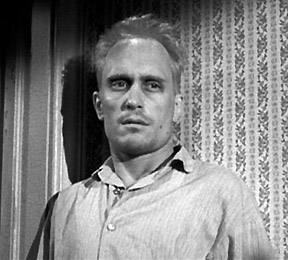 |
| Boo Radley of To Kill a Mockingbird |
 |
| Mr. Clark of Grey's Anatomy |
Works Cited
Lee, Harper. To Kill A Mockingbird. Philadelphia
Rhimes, Shonda. "Sanctuary." Grey's Anatomy. Dir. Stephen Cragg. ABC. 20 May 2010. Television.

No comments:
Post a Comment